
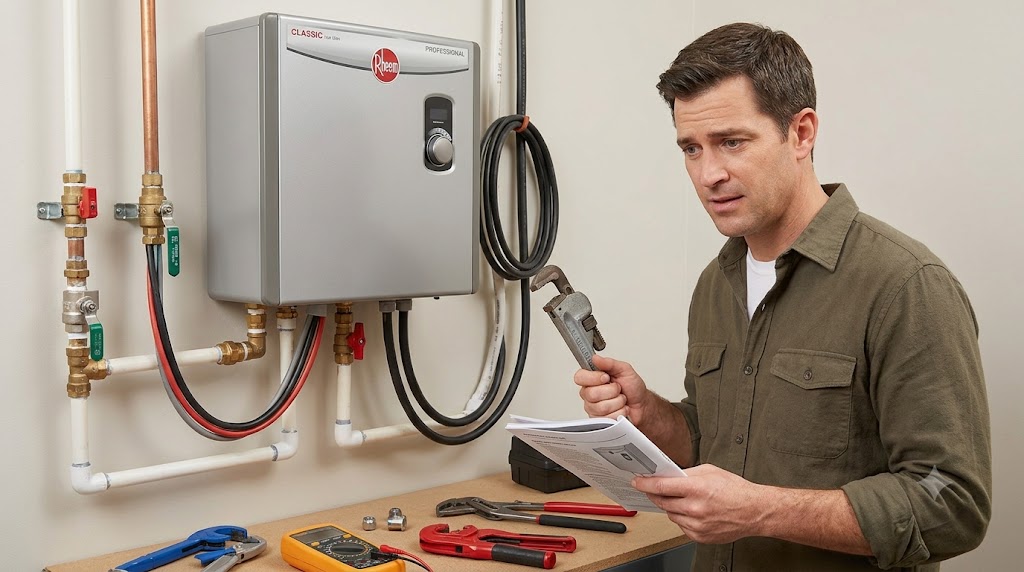
One verified RTEX-24 reviewer described themselves as “pretty handy” with plenty of home improvement experience, and still made a point of hiring a certified electrician for the pre-wiring, adding they “would have been afraid to try and do this myself even with all my experience.” That’s a more honest answer to this question than most DIY guides give you.
The plumbing connection on a Rheem RTEX-24 is manageable for many DIY homeowners, but the electrical work, three 40-amp double-pole breaker circuits on 240V, is not recommended as a DIY project unless you are a licensed electrician yourself. Multiple verified owner reviews, including from experienced DIYers, specifically describe bringing in professional electricians for this exact portion of the installation.
What You Can Reasonably DIY
The water connection itself uses standard 3/4 inch NPT fittings, similar to plumbing work many homeowners have handled before on other projects. If you’re comfortable shutting off water, disconnecting an old tank, and connecting new fittings with basic plumbing tools, this portion of the installation is within reach for many DIYers.
Mounting the unit to the wall is also straightforward, the RTEX-24 weighs just 17.8 pounds and comes with standard mounting hardware, nowhere near the physical challenge of hanging a traditional storage tank.
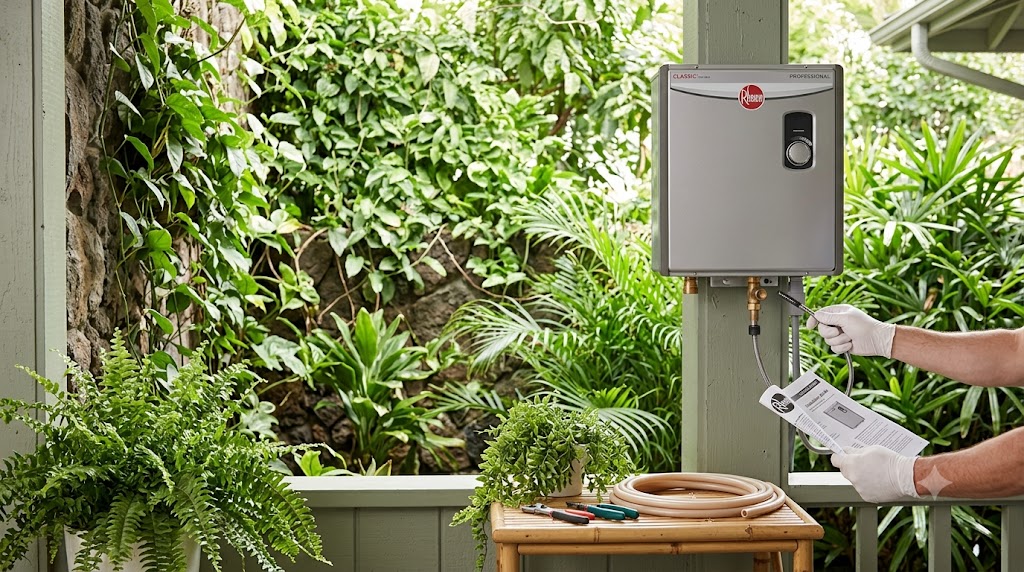
What You Should Not DIY
The electrical work is where real risk enters the picture. You’re dealing with 240V circuits at up to 100 amps total across three double-pole breakers, a serious amount of power that can cause severe injury or fire if installed incorrectly. This isn’t a standard outlet or light fixture install, it’s comparable in scope to wiring a large HVAC system or an EV charger.
Beyond the safety risk, most jurisdictions require licensed electrical work of this scale to be permitted and inspected, meaning a DIY installation may not pass inspection even if it technically functions, creating problems if you ever sell your home or file an insurance claim related to electrical work.
What Real Reviewers Actually Did
Looking at detailed verified reviews for the RTEX-24, a consistent pattern emerges: homeowners handle their own plumbing connection, then bring in a licensed electrician specifically for the breaker and wiring work. One reviewer specifically noted having the electrician do the “pre-wiring” while they handled the rest, a reasonable division of labor that keeps costs down without taking on unreasonable risk.
Another reviewer’s experience serves as a useful cautionary tale: after installing a unit without adequately tuning for their specific water pressure and flow conditions (they were on well water, at the end of their utility’s line), they had to go through significant trial and error involving flow restrictors, pressure regulators, and eventually a smaller unit to solve performance problems. That’s not strictly an electrical safety issue, but it illustrates how tankless installations can require more nuanced troubleshooting than a simple swap-and-go appliance, even for handy homeowners.
A Sensible Middle Ground
If you want to save money without taking on unreasonable risk, consider this division of labor: handle the plumbing connection and unit mounting yourself if you’re comfortable with basic plumbing work, then hire a licensed electrician specifically for the breaker installation and final electrical connection. This keeps your costs down (you’re not paying an electrician’s hourly rate for tasks you can safely handle yourself) while ensuring the highest-risk portion of the job is done correctly and up to code.
For the full step-by-step process covering both the DIY-friendly and professional portions of installation, see our complete installation guide.
Rheem RTEX-24 24kW 240V Electric Tankless Water Heater - Check Current Price on Amazon
The Bottom Line
You can reasonably DIY the plumbing connection and mounting for a Rheem RTEX-24, but the electrical work involving three 40-amp double-pole breaker circuits is a job for a licensed electrician, a conclusion echoed by multiple experienced DIY homeowners in their own verified reviews.
Frequently Asked Questions
Can I install the Rheem RTEX-24 myself? The plumbing connection is manageable for many DIY homeowners, but the electrical work is not recommended as a DIY project unless you are a licensed electrician, given the 240V, high-amperage circuits involved.
Is it legal to install my own tankless water heater electrical work? Requirements vary by jurisdiction, but electrical work of this scale often requires a licensed electrician and permitted, inspected work in most areas. Check your local building department for specific requirements.
How much money can I save by DIYing part of the installation? By handling the plumbing connection and mounting yourself and only hiring an electrician for the breaker and wiring work, you can reduce total labor costs compared to hiring a full-service installer for everything.
What happens if I install the electrical work myself and it’s wrong? Incorrect high-voltage electrical work poses real fire and injury risks, and may also fail inspection or create issues with insurance claims or future home sales if discovered.
Do experienced DIYers still hire electricians for this job? Yes, based on verified reviews, even experienced, handy homeowners specifically describe bringing in licensed electricians for the RTEX-24’s electrical work, citing the seriousness of the voltage and amperage involved.
Can a general handyman do this electrical work instead of a licensed electrician? Given the voltage and amperage involved, this work should be done by a licensed electrician, both for safety and to ensure it meets code requirements for inspection and insurance purposes.
Is the plumbing connection difficult to DIY? For homeowners with basic plumbing experience, the 3/4 inch NPT connection is generally manageable, similar in difficulty to other common home plumbing projects.
What tools do I need for the DIY-friendly portions of installation? Standard plumbing tools (wrenches, pipe fittings, shutoff valves) handle the water connection. The electrical portion requires professional-grade tools typically reserved for licensed electricians.
Should I get a permit even if I do some of the work myself? Yes, if your jurisdiction requires a permit for the electrical work (which is common), that requirement applies regardless of who performs the plumbing portion of the installation.
Is it worth trying to DIY the whole installation to save money? Given the real safety risks and potential code compliance issues, most verified reviewers, including experienced DIYers, recommend leaving the electrical work to a licensed professional, even if you handle the plumbing yourself.
References
- Verified Amazon customer reviews describing real DIY and professional installation experiences for the Rheem RTEX-24, accessed July 2026: https://www.amazon.com/dp/B01MS9DVEE
- Rheem RTEX-24 official installation requirements, Amazon.com manufacturer content, accessed July 2026