
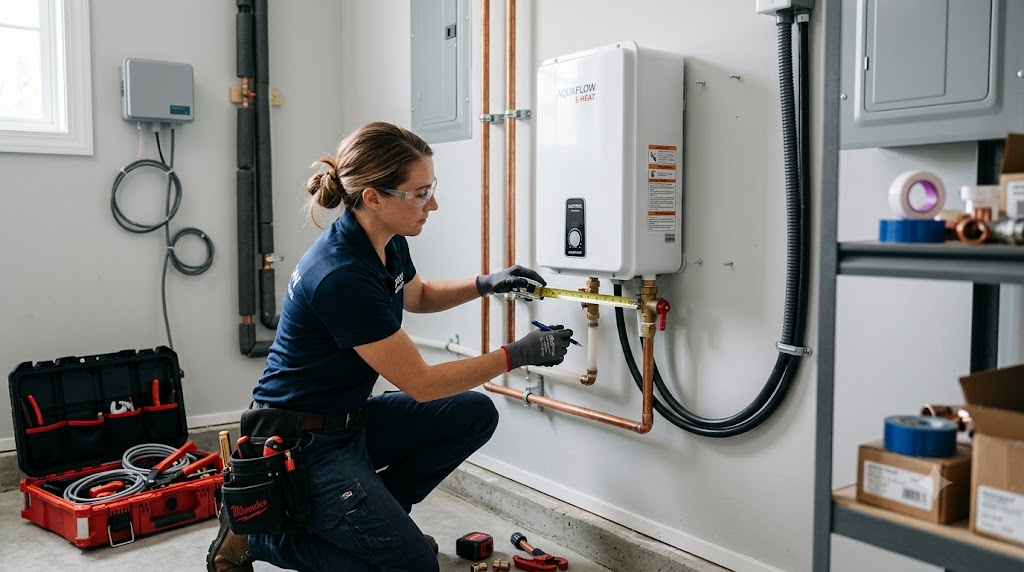
I’ve seen the same mistake play out twice in my extended family: buy the cheapest tankless unit that fits the budget, install it, then discover the shower runs lukewarm the moment someone starts the dishwasher. Sizing is the single most important decision in this entire purchase, more important than brand, and it’s the one step people skip most often.
Electric tankless water heater sizing depends on two factors multiplied together: your household’s peak simultaneous flow demand in gallons per minute (GPM), and the temperature rise needed to bring your incoming groundwater up to your desired output temperature. A unit rated for 5.9 GPM in a warm climate might only deliver 3 to 4 GPM in a cold one, which is why matching specs to your actual location matters as much as matching them to your fixture count.
Step One: Calculate Your Peak GPM Demand
Add up the flow rate of every fixture that might run at the same time during your household’s busiest moment, typically a weekday morning. Standard reference figures from manufacturer literature include:
| Fixture | Typical GPM |
|---|---|
| Bathroom sink | 0.5 GPM |
| Kitchen sink | 1.0 to 2.0 GPM |
| Dishwasher | 1.0 to 2.0 GPM |
| Washing machine | 1.0 to 1.5 GPM |
| Standard shower head | 2.0 GPM |
| Water-saving shower head | 1.5 GPM |
| Bathtub | Up to 4.0 GPM |
If your household regularly runs two showers and a kitchen sink at the same time, that’s roughly 5 to 6 GPM of simultaneous demand, right at the ceiling of what a unit like the Rheem RTEX-24 (up to 5.9 GPM) can comfortably handle in a warm climate.
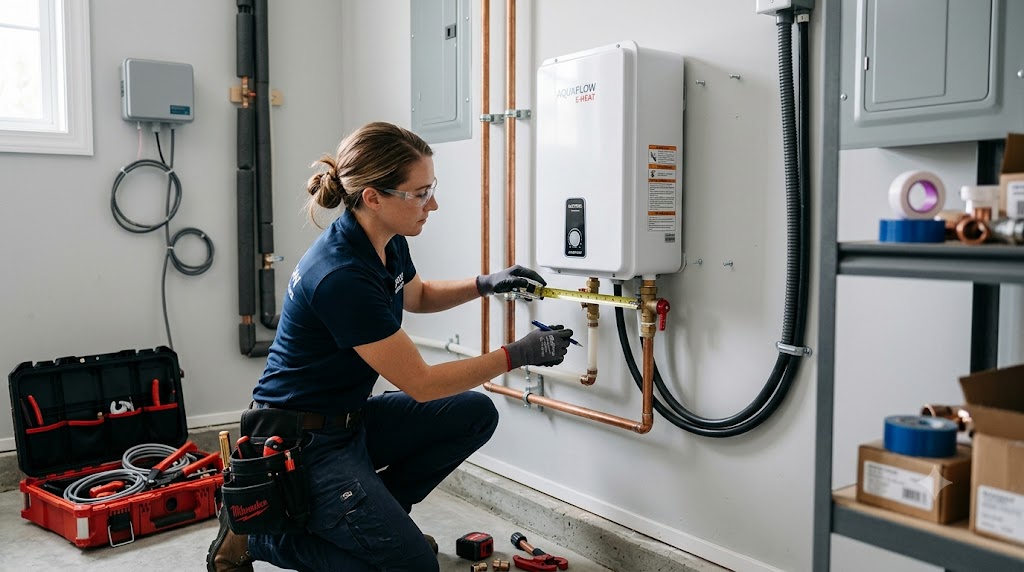
Step Two: Factor In Your Groundwater Temperature
This is the step most buyers skip, and it’s the reason so many negative reviews for every brand in this category mention “doesn’t get hot enough” or “works fine in summer but not winter.” Electric tankless heaters have a fixed power budget. The colder your incoming water, the more of that power gets used just raising the temperature, leaving less capacity to maintain flow rate.
A unit rated for 5.9 GPM assumes a specific incoming water temperature, typically in the 50s to 60s Fahrenheit, common in warmer states. If your groundwater runs colder, in the 40s or below, common in northern states during winter, expect meaningfully less usable flow from the same unit. One verified Rheem RTEX-24 reviewer specifically noted living in North Central Florida with groundwater at a “rock-solid 72F year-round,” calling it “the ideal setup for tankless electrics” and cautioning that buyers further north should expect the unit to “likely fall short at the exact worst time,” meaning winter.
Step Three: Match Household Size to Manufacturer Fixture Ratings
Rather than relying purely on GPM math, cross-check against how each manufacturer rates their units for simultaneous fixture use. Rheem’s own comparison chart rates its RTEX lineup this way:
| Model | Power | Max GPM | Fixtures Served (Max) |
|---|---|---|---|
| RTEX 11kW | 11 kW | 2.68 | 1 shower, 2 sinks |
| RTEX-18 | 18 kW | 4.4 | 2 showers |
| RTEX-24 | 24 kW | 5.9 | 2 showers, 2 sinks |
This kind of manufacturer-published fixture rating is more reliable for real-world planning than raw GPM math alone, since it accounts for realistic overlap patterns rather than a theoretical worst case.
Common Sizing Mistakes
The most expensive mistake is undersizing to save money upfront, then needing to add electrical capacity later to upgrade. Since larger units typically require more breaker circuits (the RTEX-24 needs three 40-amp double-pole circuits versus two for the RTEX-18), sizing up during your initial electrical rough-in is far cheaper than adding a circuit after the fact.
The second most common mistake is ignoring climate entirely and sizing based only on a warm-climate spec sheet number. If you live somewhere with genuinely cold winters, plan around the unit’s performance at your coldest expected groundwater temperature, not its best-case rating.
A Simple Sizing Rule of Thumb
For a small home (1 to 2 bathrooms, warm to moderate climate): an 18kW unit like the RTEX-18 is often sufficient.
For a small to mid-sized home (2 to 3 bathrooms, warm to moderate climate, occasional overlapping fixture use): a 24kW unit like the RTEX-24 provides comfortable headroom.
For a larger home or cold climate: consider a 27kW+ unit, or plan for two smaller units serving different zones of the house.
For the full technical comparison between two of the most commonly sized units in this category, see our RTEX-24 vs RTEX-18 guide.
Rheem RTEX-24 24kW 240V Electric Tankless Water Heater - Check Current Price on Amazon
The Bottom Line
Correct sizing for an electric tankless water heater means accounting for both your household’s peak simultaneous fixture demand and your local groundwater temperature, not just picking the biggest unit your budget allows. Undersizing leads to cold water frustration, while sizing generously upfront avoids costly electrical rework down the line.
Frequently Asked Questions
How do I size an electric tankless water heater? Calculate your household’s peak simultaneous GPM demand across all fixtures likely to run at once, then factor in your local groundwater temperature, since colder water reduces a unit’s effective flow rate.
What size electric tankless water heater do I need for a 3 bedroom house? For a typical 2 to 3 bathroom home in a moderate climate, a 24kW unit like the Rheem RTEX-24 (up to 5.9 GPM) is generally sufficient, provided showers don’t regularly overlap with heavy simultaneous fixture use.
Does climate affect tankless water heater sizing? Yes significantly. Colder incoming groundwater requires more power to reach the same output temperature, which reduces the unit’s effective flow rate compared to its warm-climate rating.
What happens if I undersize my electric tankless water heater? You’ll experience reduced water pressure or temperature drops when multiple fixtures run simultaneously, and the fix often requires adding electrical capacity later, which costs more than sizing correctly upfront.
How many GPM do I need for two showers at once? Standard shower heads use about 2 GPM each, so two simultaneous showers need roughly 4 GPM minimum, before accounting for any other fixtures running at the same time.
Is it better to oversize an electric tankless water heater? Moderate oversizing provides useful headroom for unexpected simultaneous demand and colder winters, but significant oversizing adds unnecessary cost and electrical infrastructure requirements without proportional benefit.
Can one electric tankless water heater serve an entire house? Yes, provided it’s sized correctly for your household’s peak demand and climate. Larger homes may need a bigger unit or multiple units serving different zones.
What’s the difference between point-of-use and whole-house sizing? Point-of-use sizing only needs to account for a single fixture’s flow rate, while whole-house sizing must account for the realistic overlap of multiple fixtures running simultaneously across the home.
How do manufacturers rate fixture capacity? Most manufacturers publish a maximum fixture rating (for example, “2 showers, 2 sinks”) based on their own testing, which accounts for realistic simultaneous use patterns better than raw GPM math alone.
Should I consult a professional for sizing? For anything beyond a simple single-bathroom replacement, consulting a licensed plumber or electrician for a proper load calculation is worth the cost, since correcting an undersized installation later is significantly more expensive.
References
- Rheem RTEX family specifications and fixture capacity ratings, Amazon.com manufacturer content, accessed July 2026: https://www.amazon.com/dp/B01MS9DVEE
- Verified Amazon customer review discussing groundwater temperature impact on tankless performance, accessed July 2026