
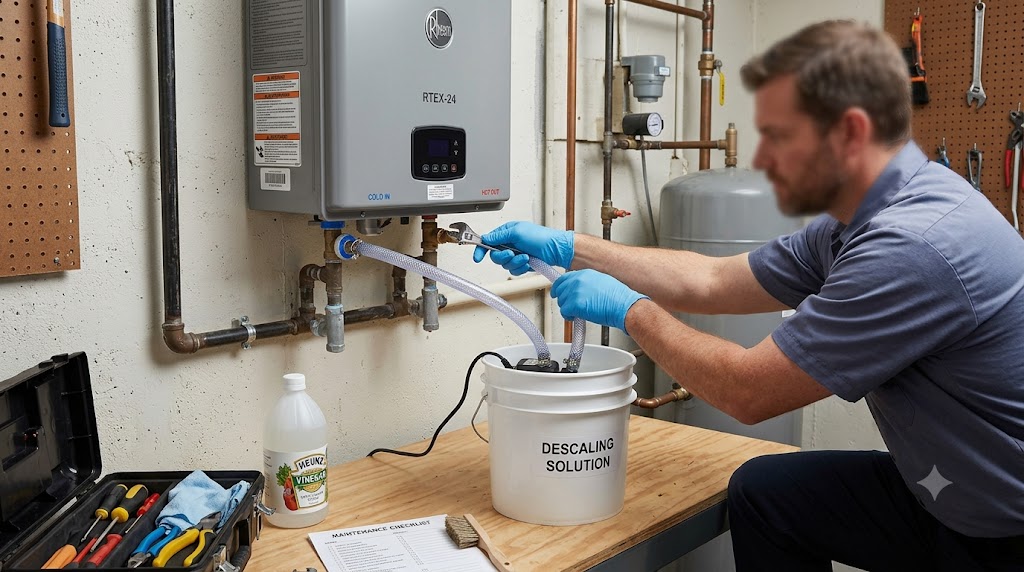
The single biggest predictor of whether an RTEX-24 owner reports years of trouble-free use versus early element failure, based on patterns across verified reviews, isn’t luck. It’s whether they kept up with basic descaling maintenance, particularly in hard water areas.
Regular maintenance for the Rheem RTEX-24 centers on periodic descaling to remove mineral buildup from the heating elements, along with occasional visual inspection of connections and the water filter if one is installed. Hard water areas need more frequent descaling, commonly recommended annually or more often, while soft water areas can often go longer between maintenance cycles.
Why Descaling Matters So Much
The RTEX-24’s three copper immersion heating elements sit directly in the water flow path, which means any minerals in your water (calcium, magnesium, and other compounds common in hard water) gradually deposit on the element surfaces over time. This buildup, called scale, insulates the element from the water it’s supposed to heat, forcing it to work harder and run hotter to compensate, which accelerates wear and increases the risk of premature failure.
Detailed verified reviews of RTEX units specifically flag mineral buildup as a likely contributing factor in cases of early element failure, reinforcing that this isn’t a theoretical concern, it shows up in real ownership experiences.
Recommended Descaling Schedule
While Rheem’s own manual provides model-specific guidance you should follow directly, general industry practice for electric tankless units suggests:
Hard water areas (a common designation for water with high mineral content) generally benefit from descaling every 6 to 12 months.
Moderate water hardness typically allows for annual descaling as a reasonable baseline.
Soft water areas may be able to extend descaling intervals further, though periodic checks are still worth doing to confirm buildup isn’t accumulating faster than expected.
If you don’t know your local water hardness, many municipal water utilities publish this information, or a simple home water hardness test kit can give you a quick answer.
How Descaling Works
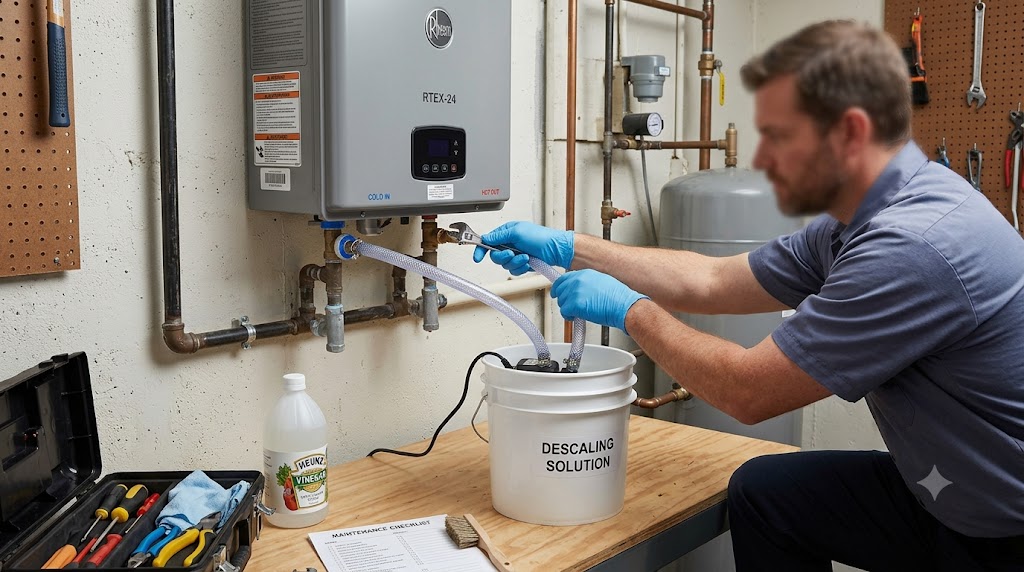
The general process for descaling an electric tankless water heater involves isolating the unit from your main water supply using dedicated service valves (if installed during initial setup), connecting a submersible pump to circulate a descaling solution (often a vinegar-based or manufacturer-specific product) through the unit’s internal components for a set period, typically 45 minutes to an hour, then flushing the system with clean water before restoring normal operation.
This is meaningfully easier if isolation valves were installed during the original installation, since it avoids needing to shut off water to your entire home during the maintenance process. If your unit doesn’t currently have these valves, they’re a worthwhile retrofit before your first scheduled descaling.
Other Maintenance Checks
Beyond descaling, periodically inspect the unit’s electrical connections for any signs of looseness or corrosion, particularly given at least one verified review’s account of a wiring harness arcing issue that could have caused a fire. If you notice anything unusual, discoloration, a burning smell, or visible damage, cut power immediately and have a licensed electrician inspect the connections.
If your installation includes an inline water filter (recommended by at least one verified reviewer specifically to reduce how often the system needs flushing), check and replace that filter according to its specific manufacturer guidance, generally every few months depending on water quality.
Signs You’re Overdue for Maintenance
Reduced maximum water temperature despite the unit running at full capacity, increasing frequency of error codes, or visibly reduced water pressure at fixtures served by the unit can all indicate scale buildup has progressed to the point where maintenance is overdue, rather than indicating a component failure requiring replacement.
For the full replacement process if an element has already failed due to lack of maintenance, see our element replacement guide.
Rheem RTEX-24 24kW 240V Electric Tankless Water Heater - Check Current Price on Amazon
The Bottom Line
Regular descaling, especially in hard water areas, is the single most effective step you can take to extend the life of your Rheem RTEX-24’s heating elements. Combine it with periodic electrical connection checks and, if applicable, filter replacement, to keep the unit running reliably for years.
Frequently Asked Questions
How often should I descale my Rheem RTEX-24? This depends on your local water hardness, generally every 6 to 12 months in hard water areas, with soft water areas potentially able to extend that interval. Check your specific manual for Rheem’s exact recommendation.
What happens if I don’t descale my Rheem RTEX-24? Mineral buildup on the heating elements can insulate them, forcing the unit to work harder and increasing the risk of premature element failure, based on patterns documented in verified owner reviews.
How do I descale a Rheem RTEX-24? The general process involves isolating the unit with service valves, circulating a descaling solution through it with a submersible pump for about 45 minutes to an hour, then flushing with clean water before restoring normal operation.
Do I need special valves installed to descale my unit? Dedicated isolation service valves make the process significantly easier by avoiding a full home water shutoff, and are worth installing if your unit doesn’t already have them.
How do I know if my water is hard? Many municipal water utilities publish local water hardness data, or you can use a simple home water hardness test kit to check directly.
What are signs that my Rheem RTEX-24 needs maintenance? Reduced maximum water temperature, increasing frequency of error codes, or reduced water pressure at fixtures can all indicate scale buildup that maintenance would address.
Can I descale the unit myself? Yes, with the right equipment (a submersible pump and appropriate descaling solution) and isolation valves installed, this is a manageable DIY maintenance task for most homeowners.
Does descaling really extend the life of the heating elements? Yes, based on patterns across verified reviews, regular descaling in hard water areas is associated with fewer reported element failures compared to units that go without regular maintenance.
Should I install a water softener instead of descaling regularly? A water softener can reduce how often descaling is needed, though it’s a separate investment. Many households use both, a softener to reduce mineral content plus periodic descaling as a maintenance backstop.
What other maintenance does the Rheem RTEX-24 need besides descaling? Periodic visual inspection of electrical connections for looseness or corrosion, and replacement of any inline water filter if one is installed, are both worthwhile additions to a regular maintenance routine.
References
- Verified Amazon customer reviews describing maintenance patterns and element failure causes for the Rheem RTEX-24, accessed July 2026: https://www.amazon.com/dp/B01MS9DVEE
- General industry guidance on electric tankless water heater descaling practices, accessed July 2026