
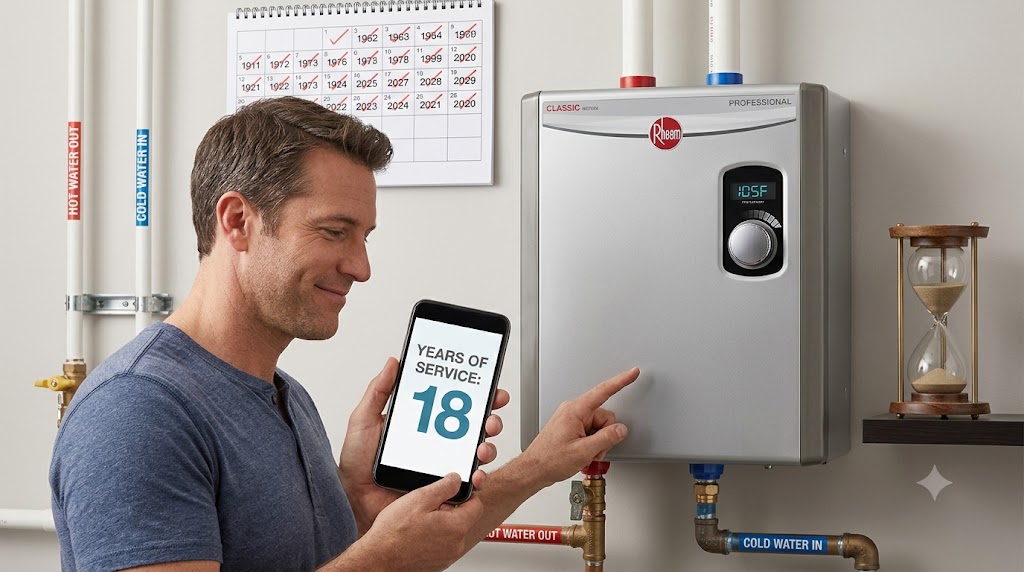
Two verified reviews of the same basic RTEX unit tell almost opposite stories: one owner reported their unit still running great after several years with no significant issues, while another documented replacing nearly every internal component over roughly two years before eventually replacing the entire unit. Both experiences are real and verified. Understanding what separates them tells you more about lifespan than any single average number could.
Rheem does not publish an official lifespan figure for the RTEX-24, but based on patterns across verified owner reviews, well-maintained units in moderate water conditions can run reliably for many years, while units in hard water areas without regular descaling show a documented pattern of earlier component failures, in some cases within the first year. Industry consensus for electric tankless water heaters generally suggests lifespans in the range of 15 to 20 years under good conditions, though individual results vary significantly based on water quality, installation quality, and maintenance.
What the Real Reviews Show
Amazon’s own aggregated review analysis for the RTEX-24 directly notes that “reliability is a concern as units fail after 10 months of use” for some buyers, a genuinely short lifespan reflecting real documented cases. At the same time, the unit maintains a 4.2-star overall rating across more than 4,000 reviews, meaning the majority of owners are not experiencing this outcome.
One particularly detailed verified review illustrates the range clearly: an 18kW RTEX unit (a close relative to the RTEX-24 sharing the same core design) went through multiple heating element failures, a wire harness failure, sensor failures, and a motherboard failure over roughly two years before the owner replaced the entire unit, only to have similar issues recur on the replacement. That reviewer specifically flagged this as unusual and serious enough to warn other buyers directly.
By contrast, other verified reviews describe years of reliable operation with no significant issues, particularly among owners who specifically mention living in areas with favorable groundwater conditions or who describe proactive maintenance habits.
What Actually Determines Lifespan
Based on the patterns across these varied experiences, a few factors appear to matter more than luck alone:
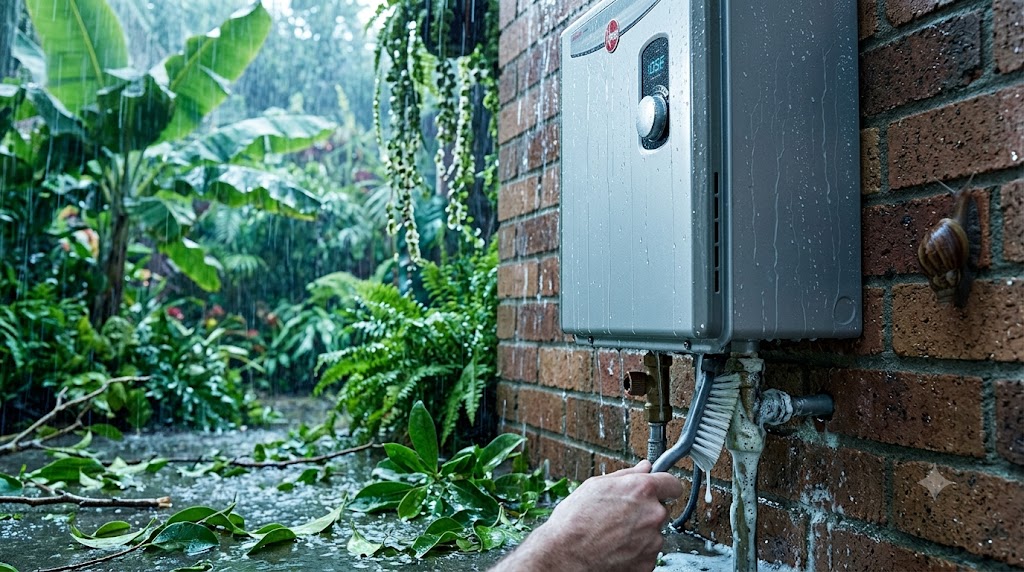
Water hardness is the most frequently cited factor. Areas with hard water place more stress on the heating elements through mineral scale buildup, and reviewers in these areas report both more frequent maintenance needs and higher rates of element failure.
Installation quality matters significantly, particularly around electrical connections. The documented wire harness arcing incident described in one detailed review suggests that connection quality during installation can materially affect how long components last, independent of the unit’s inherent design.
Maintenance consistency, specifically regular descaling, appears to correlate with longer component life based on the patterns across available reviews, though this is based on anecdotal patterns rather than a controlled study.
Usage patterns and electrical capacity matching also play a role. Units run at or beyond their rated capacity consistently, due to undersizing for the household’s actual demand, may experience more component stress than correctly sized installations.
Setting Realistic Expectations
Rather than expecting a single guaranteed lifespan figure, it’s more useful to understand that your specific outcome depends heavily on factors within your control: whether you maintain the unit properly, whether your installation was done correctly by a qualified professional, and whether your local water hardness requires more proactive care. Buyers who take these factors seriously appear to fare better in the available review data than those who treat the unit as a install-and-forget appliance.
If you experience early or repeated component failures despite reasonable maintenance, that pattern (as documented in at least one detailed review) may point to a specific defective unit rather than a universal characteristic, and pursuing warranty support or replacement through Rheem directly is a reasonable next step.
For the specific maintenance steps that appear to correlate with longer component life, see our complete maintenance guide.
Rheem RTEX-24 24kW 240V Electric Tankless Water Heater - Check Current Price on Amazon
The Bottom Line
The Rheem RTEX-24 doesn’t have a single guaranteed lifespan. Well-maintained units in favorable water conditions can run reliably for many years, while neglected units or those in hard water areas without regular descaling show a documented pattern of earlier failures. Your maintenance habits and installation quality matter more than any single average statistic.
Frequently Asked Questions
How long does the Rheem RTEX-24 last? Rheem doesn’t publish an official figure, but well-maintained units can run reliably for many years, while some documented cases show failures within the first year, largely tied to water hardness and maintenance habits.
What’s the average lifespan of an electric tankless water heater? Industry consensus generally suggests 15 to 20 years under good conditions, though this varies significantly by brand, water quality, and maintenance.
Does hard water shorten the Rheem RTEX-24’s lifespan? Yes, based on patterns across verified reviews, hard water areas show a documented pattern of more frequent element failures without regular descaling maintenance.
Can poor installation shorten the unit’s lifespan? Yes, at least one detailed review documented a wiring harness issue that suggests installation and connection quality can meaningfully affect component longevity.
What can I do to extend my Rheem RTEX-24’s lifespan? Regular descaling (especially in hard water areas), ensuring proper professional installation, and correctly sizing the unit for your household’s actual demand all appear to correlate with longer component life.
Why do some Rheem RTEX-24 units fail within a year while others last much longer? Based on available review patterns, water hardness, maintenance consistency, and installation quality appear to be the biggest differentiating factors between these outcomes.
Is a unit that fails within a year defective? It’s possible, and if you experience repeated failures despite reasonable maintenance, pursuing warranty support directly through Rheem is a reasonable next step rather than assuming this is a universal characteristic of the unit.
Does Rheem offer a warranty that covers early failures? Rheem provides manufacturer warranty documentation for its products, though specific terms and coverage should be confirmed directly, since coverage can vary by component and circumstance.
Should I expect my Rheem RTEX-24 to need element replacement eventually? Given documented patterns in verified reviews, especially in hard water areas, planning for eventual element replacement as routine maintenance rather than an unexpected failure is a realistic approach.
Is the Rheem RTEX-24’s lifespan comparable to competing brands? Available review data suggests lifespan varies by individual unit and conditions more than by brand specifically, since similar patterns of both long-term reliability and early failures appear across competing electric tankless brands as well.
References
- Amazon.com AI-generated review summary and detailed verified customer reviews describing long-term ownership experiences for the Rheem RTEX-24, accessed July 2026: https://www.amazon.com/dp/B01MS9DVEE